AI workshops for arts, culture & heritage organisations
Workshops developed through work with arts, culture and heritage organisations, combining practical experimentation with recurring sector questions around copyright, provenance, reliability, environmental impact, creative practice, organisational policy and where AI is useful. The facilitation is neutral towards AI adoption, and participants are encouraged to bring their own views, concerns, enthusiasm, scepticism and uncertainty into the room.
Jocelyn Burnham is an independent AI consultant and facilitator working with arts, culture and heritage organisations. Her work combines practical experimentation with critical discussion around the questions cultural organisations are already facing.
AI facilitation shaped by the sector.
My learning programmes have developed through more than 100 workshops with museums, theatres, heritage organisations, orchestras and arts bodies, alongside three years of anonymous pre-session surveys tracking concerns, interests and confidence around AI across the sector.
Participants often arrive with specific questions. What is ethical? What can be trusted? What does copyright mean in practice? What information can safely go into a tool? What is the environmental cost? How might AI affect creative work and jobs? What does organisational policy actually allow?
The workshops are designed around informed judgement rather than a particular position on AI adoption. Participants are encouraged to question the technology, test it, reject particular uses, identify concerns and share different emotional or professional responses. The aim is to create enough shared understanding for people to make their own judgements.
These programmes are based on the belief that individual agency, constructive communication and safe, structured experimentation are powerful tools for learning about AI and critically evaluating it within a specific context.
The session gives people enough shared understanding and practical experience to judge individual uses for themselves, based on their own experience, values and perception of quality.
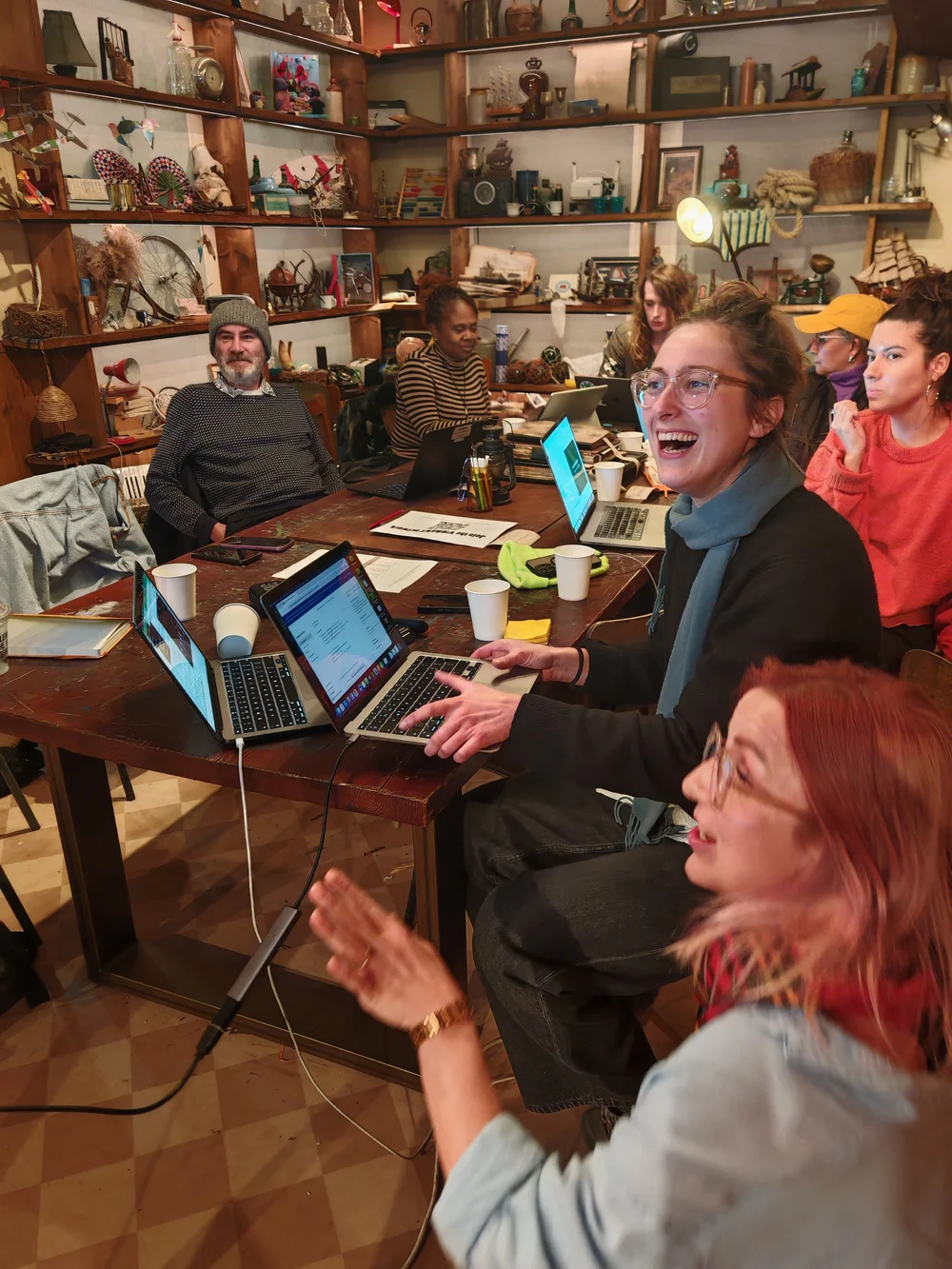
Explanation, experimentation and discussion.
Each session responds to the group, including the different views and levels of confidence people bring with them, and usually includes four kinds of work.
Build a shared foundation. Explore how generative systems work, what training data means and where it comes from, why hallucinations happen and how the wider AI landscape fits together, using examples from arts, culture and heritage. We also discuss the differences between open-source and closed-source tools, the rapid development of agentic AI systems, and how to deconstruct the claims and assumptions surrounding emerging applications.
Test applications in context. Depending on the group, this might include research, interpretation, communications, images, analysis, coding, voice, video or other applications relevant to the work. We also explore what experimentation means in practice and how organisations can develop a culture of continued experimentation to surface useful insights and areas of critical concern.
Examine the issues already affecting the sector. Copyright and provenance, bias and representation, factual reliability, environmental impact, privacy, creative labour, policy and organisational permission. We explore case studies directly from arts and culture and leave space for questions that can be overlooked in AI discussions, including whether particular developments could improve or diminish our enjoyment of work or affect our ability to support colleagues.
Develop your own judgement. Assess outputs using professional and creative expertise, design useful experiments and decide where AI is appropriate, limited or irrelevant. Sessions encourage continued self-learning, with resources and practical advice for going further after the workshop.
A format that fits the group.
A typical full-day workshop includes five hours of activity with a one-hour break, giving the group time for explanation, discussion and hands-on work at a workable pace.
Introductory sessions, half days, online workshops and longer learning programmes are also available.
The format and emphasis can be shaped around the group, purpose and time available.
What participants need.
- Previous AI experience is not required.
- Participants should bring a laptop.
- In-person sessions need reliable internet and an HDMI screen.
- Sessions can take place online or in person.
- Substantial sessions use one format for the whole group rather than hybrid delivery.
- Participants are welcome to pace, stand or use fidget devices.
- Slides are shared afterwards in PDF and PowerPoint formats.