AI projects & partnerships for arts, culture & heritage
Collaborative work with cultural organisations, universities, sector bodies, funders and technology partners on projects involving AI, experimentation, research and cultural practice. Projects can include programme design, cohort work, consultation, co-design, practical experiments, research, concept development and synthesis. I can join at an early stage to help shape the work, contribute to a wider project team, or take responsibility for a defined strand of activity.
Jocelyn Burnham is an independent AI consultant and facilitator specialising in arts, culture and heritage. Her project work combines sector knowledge, participatory facilitation, experimentation and research across collaborations involving cultural organisations, universities, funders and other partners.
Work shaped around the project.
Projects in this area can start from very different places. A partner might be exploring a new technology, developing a research programme, bringing a cohort together, testing an idea with practitioners, building evidence for a funding bid or trying to understand how a particular development affects cultural work.
My role depends on what the project needs. I might help shape the brief, design participant activity, facilitate a programme over several months, support individual organisations, run practical experiments, gather sector perspectives or draw together findings into something the wider team can use.
I am particularly interested in projects where there is genuine uncertainty. The work can create enough structure for people to investigate a question properly while leaving space for unexpected findings, changes of direction and disagreement.
Practical experimentation can help with this. Giving people something concrete to test can reveal questions around quality, rights, access, creative practice, audience response or technical limitations that are difficult to resolve through discussion alone.
The project should leave partners with clearer evidence about the question they set out to explore and enough understanding to decide what should happen next.
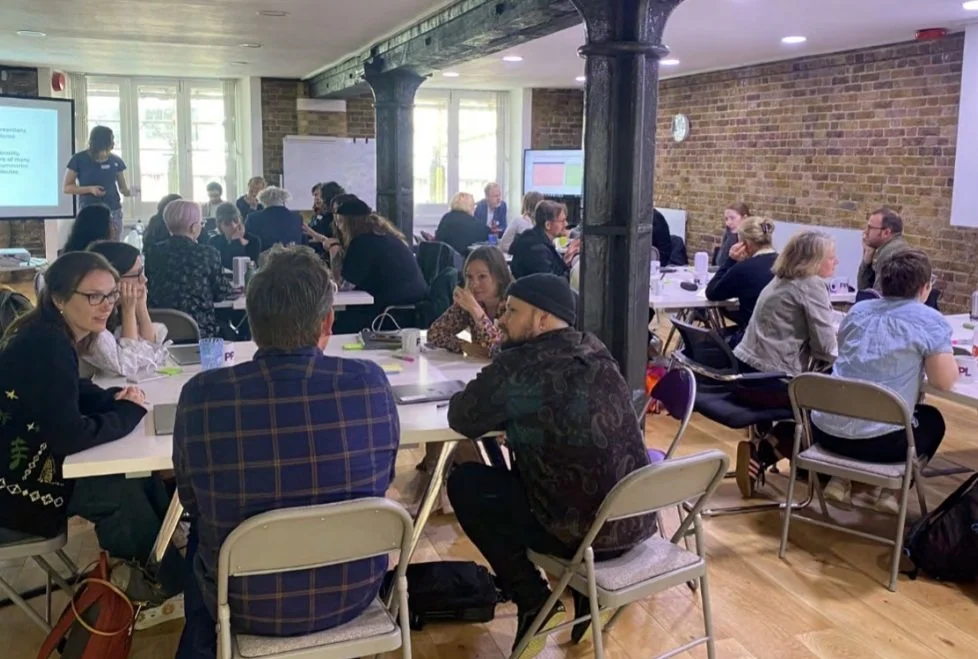
Different ways I can contribute.
The role can cover a specific area of work or develop across several parts of a larger programme.
Programme and project design
Shaping research questions, participant journeys, programme structures and practical activity with the wider project team. This can include deciding what the project needs to learn, who should be involved and how evidence will be gathered.
Facilitation and cohort work
Designing and running workshops, labs, working groups and longer programmes involving one organisation or a cohort. This can include supporting participants between shared sessions and adapting later activity in response to what the group is finding.
Research and consultation
Gathering perspectives from cultural practitioners, staff, sector networks or other stakeholders through interviews, facilitated discussions, surveys or collaborative research, then drawing out findings that can inform the wider project.
Experimental R&D
Designing practical experiments around emerging AI tools, capabilities or workflows so participants can test ideas within their own practice, document what happens and identify questions that deserve further work.
One-to-one project support
Working with participating organisations or practitioners on their own strand of a larger programme. This can involve scoping an experiment, working through difficulties, reviewing findings and helping decide what to try next.
Synthesis and concept development
Bringing together participant input, research and experimental findings into recommendations, programme ideas, briefs or concepts that the wider partnership can develop further.
Partnership facilitation
Working across groups that bring different expertise to a project, including cultural practitioners, academics, technology teams, funders and public bodies. This can help each perspective contribute to the work and remain visible in the findings.
University projects and larger funding bids.
I work with universities and other project partners on research, knowledge exchange, public engagement and cultural-sector activity involving AI.
I can contribute while a project is being developed, helping shape a work package, engagement plan, methodology, participant activity, outputs and delivery costs. For larger bids, this can help make the cultural-sector strand more concrete before submission and establish what my role would be if the project is funded.
Once a project begins, that role might include engaging cultural participants, designing workshops and experiments, facilitating cohorts, contributing sector knowledge, supporting knowledge exchange or helping translate research into activity that works with arts and cultural organisations.
I can join a consortium as an independent project partner or work with a lead organisation on a defined strand of delivery.
Examples of longer collaborative work.
These projects involved different combinations of facilitation, experimentation, research, participant support and concept development.
Let’s Get Real AI
An eight-month collaborative programme supporting 16 cultural organisations to investigate AI through practical experiments grounded in their own work, values and priorities.
My role covered programme planning, workshops, online sessions and one-to-one support for participating organisations. Learning from across the cohort contributed to a published report and recommendations for the cultural sector.
Goose
A multi-year co-design project exploring how people working in heritage could build AI literacy and confidence through knowledge grounded in the sector’s own experience.
Around forty heritage professionals took part in the Test Phase across three cohorts. Findings from the sessions informed a shared knowledge platform concept, which became the basis of a £250,000 funded Grow Phase.
Connecting different kinds of expertise.
Some projects bring cultural organisations and practitioners together with researchers, technology companies, funders or public bodies. Each group may approach the same technology with different experience, priorities and expectations.
I can help design activity that gives those perspectives a useful place in the work. Technical partners might contribute access, product knowledge or engineering expertise, while cultural participants bring creative practice, professional judgement, knowledge of audiences and direct experience of the settings in which a technology may be used.
Facilitation can help surface practical problems, ethical questions, unmet needs and unexpected possibilities as the project develops. Where relevant, the work can also establish shared expectations around consent, rights, attribution, data, participant involvement and how findings or outputs will be used afterwards.
What a project might produce.
Different projects need different kinds of outputs. These might capture evidence, support a decision, develop an idea or provide the basis for another phase of work.
- Research findings and synthesis
- Participant or sector insights
- Evidence from practical experiments
- Recommendations for partners or funders
- Programme and cohort models
- Practical methodologies and resources
- Concepts developed through co-design
- Prototype or developer briefs
- Work packages for a subsequent phase
- Material supporting a larger funding bid
- Case studies and project reports
- Conference or knowledge-exchange activity
- Recommendations for further research
- Plans for further experimentation
From focused work to longer partnerships.
A project might involve a short research exercise, an experimental lab or several facilitated sessions around one question. Larger programmes can involve multiple organisations, repeated activity, individual support and work carried out between sessions.
The amount of structure needed varies too. Some projects have defined milestones and outputs from the beginning. Others need enough flexibility for early research or participant activity to influence what happens later.
My involvement can cover a particular part of the project or continue across planning, delivery and synthesis. For university and consortium projects, it can also begin during the funding or proposal stage.