Declaration: AI wasn’t used in the writing or editing of this article’s editorial text. AI was used to analyse the dataset I discuss and create infographics and visualisations of that data. I also use AI for some templating and coding for how this article is presented.
Cristóbal Ascencio & Archival Images of AI + AIxDESIGN / https://betterimagesofai.org / https://creativecommons.org/licenses/by/4.0/
In November of 2023, I started running workshop sessions for arts and culture organisations who wanted to learn more about AI’s emerging capabilities and what they might mean for their work and wider sector. As still remains my approach, these sessions were intended to be neutral towards the potential value of AI within the sector, but instead create a space where some of the technology might be discussed, observed, criticised and experimented with.
Because these sessions were fairly bespoke, I began sending each group an optional, anonymous, pre-session questionnaire which would capture some of their initial questions, concerns, blocks and levels of experience around using AI tools. Since that time, as of writing (in late 2026) I have now collected anonymous questionnaire answers from 408 cultural workers (from 38 organisations), presenting me with a unique collection of responses which reflect the shifting attitudes, concerns, and questions around AI from this sector over the past three years.
Alongside this article, you may also find it useful to explore 2026’s UNESCO’s global survey on AI in museums. I wrote some reflections to it here.
This article won’t discuss the answers to every question, but instead I thought it would be interesting to draw out some of the findings which might best illustrate how concerns and attitudes within this sector have been shifting over the last three years (2023-2026). This data analysis (and visualisations) was performed by Claude Opus 5.5, using qualitative coding on the open-text questions. Beneath each visualisation, when relevant, I’ll give my own reflections.
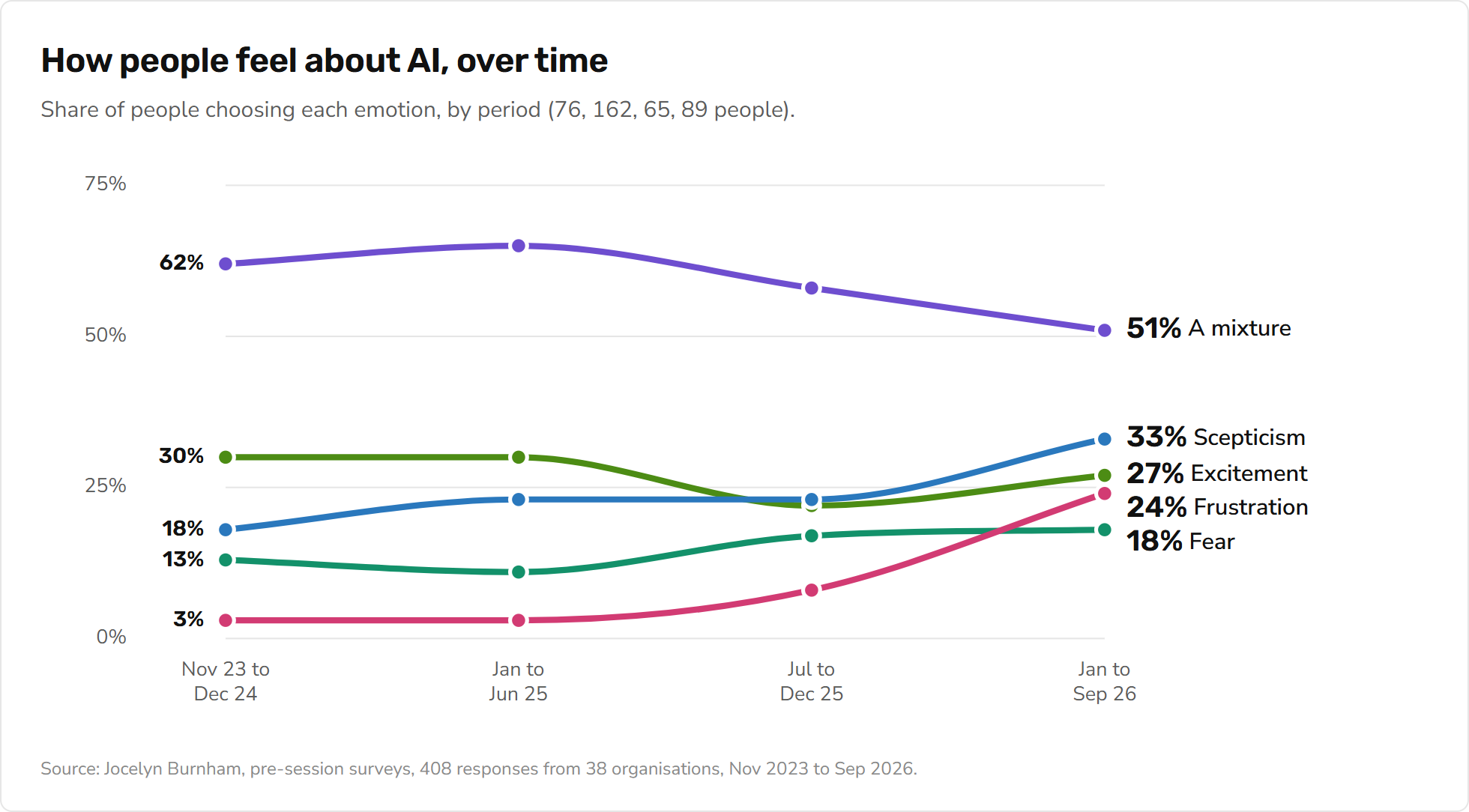
Broadly I have noticed that more critical feelings towards AI have gradually increased across three years of workshops, and that is reflected here. At the same time, what isn’t reflected in this graph is perhaps the polarisation of feeling - I tend to notice that a person might feel more inclined to consider themselves generally ‘anti-AI’ or enthusiastic about AI, instead of generally positioning themselves as being unsure where they stand.
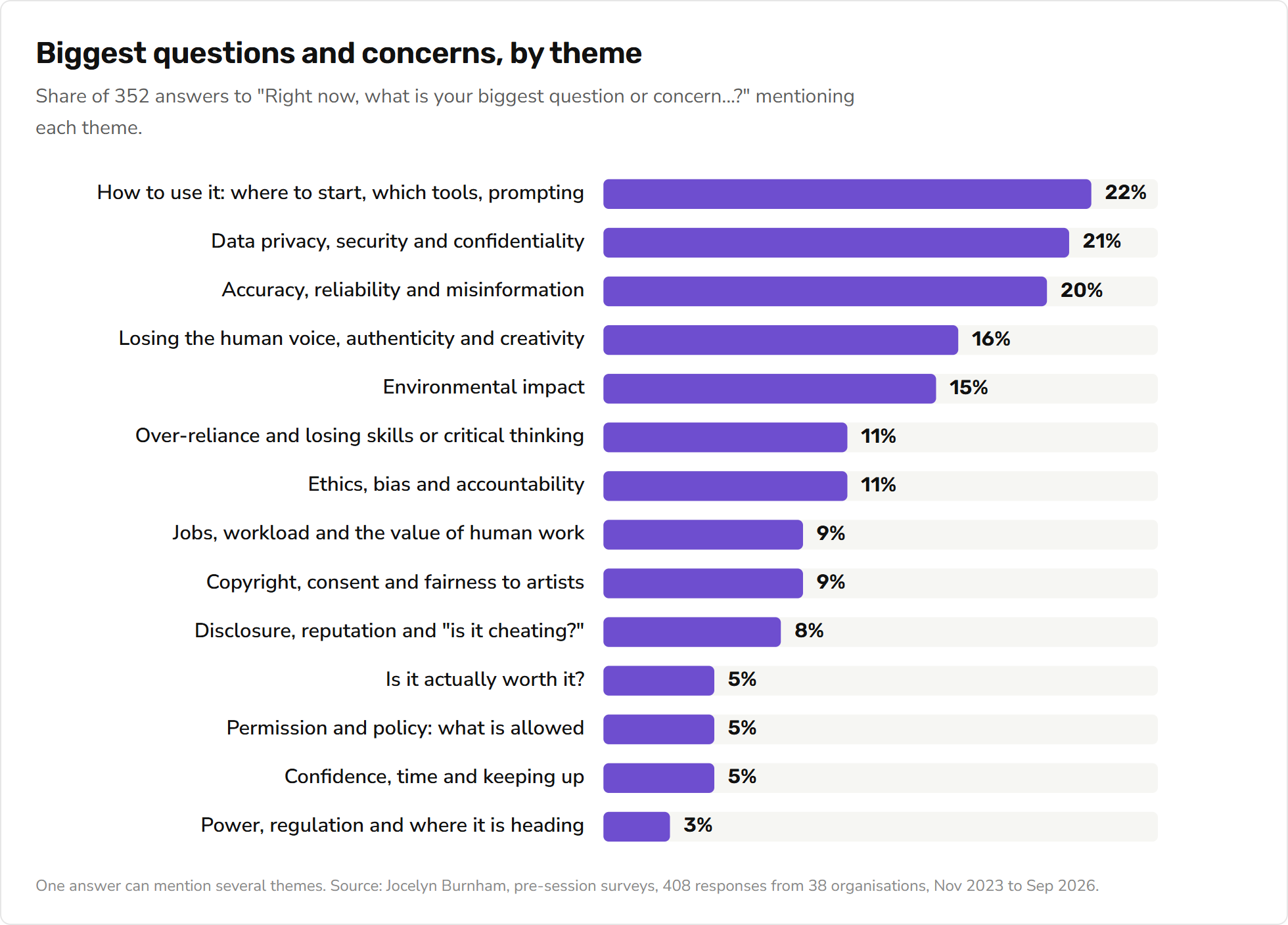
This graph probably best illustrates the concerns and questions I would expect to emerge within a session, and the same concerns which often emerge when I work with organisations on surveying their staff around AI and developing a policy which responds to that. This list might be fairly familiar to those already discussing AI frequently within arts and culture, but I find it more interesting when we look at how these concerns have shifted in prominence over the last three years, as illustrated below.
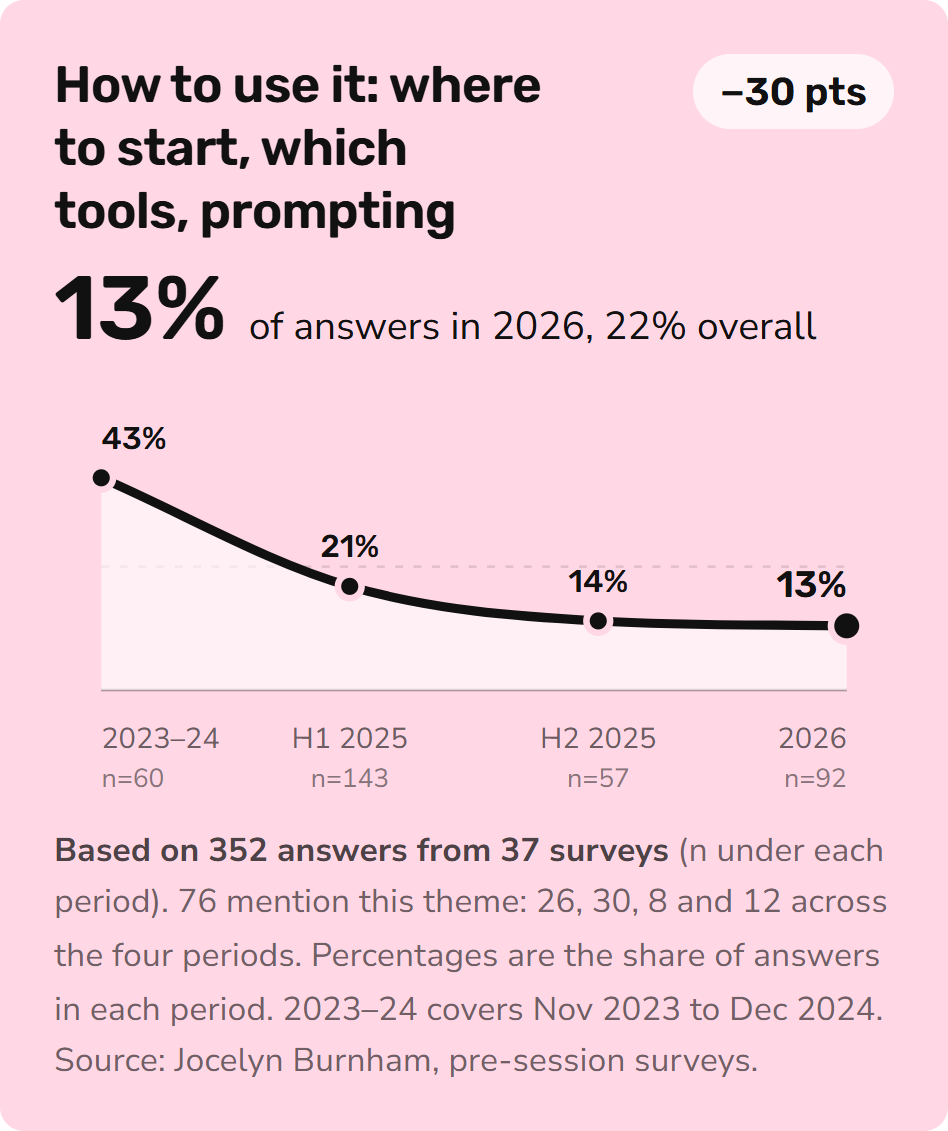
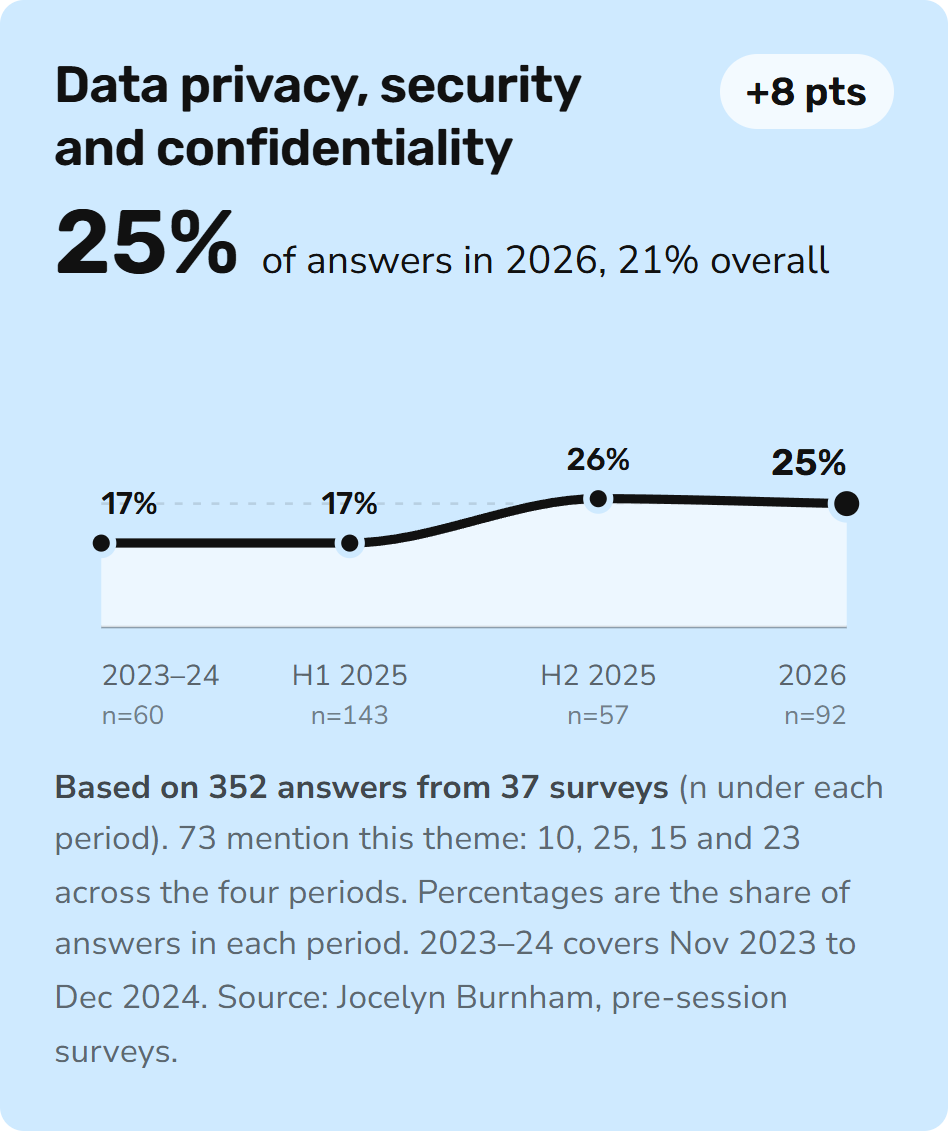
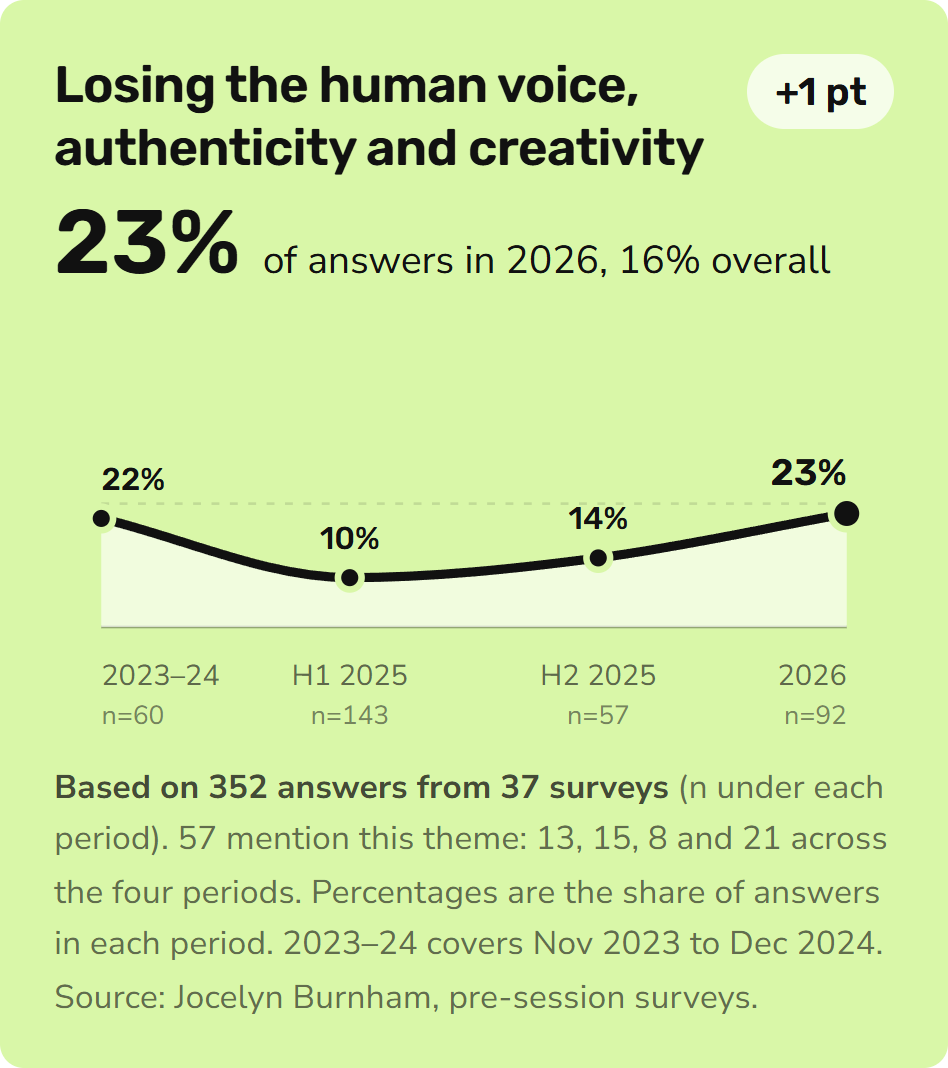
Most striking to me in this set is how practical questions (over particular use-case scenarios and tool selection) have sharply gone down over the past three years, as questions have shifted from “could we” to “should we”, perhaps reflecting the greater ethical concerns or critical discussions around the technology. As a facilitator, I’ve re-weighted my sessions to follow this trend, and I would reflect that my own materials now place much greater emphasis on how we define authenticity and creativity around AI, than attempting to extrapolate potential applications or advertised abilities of AI tools.
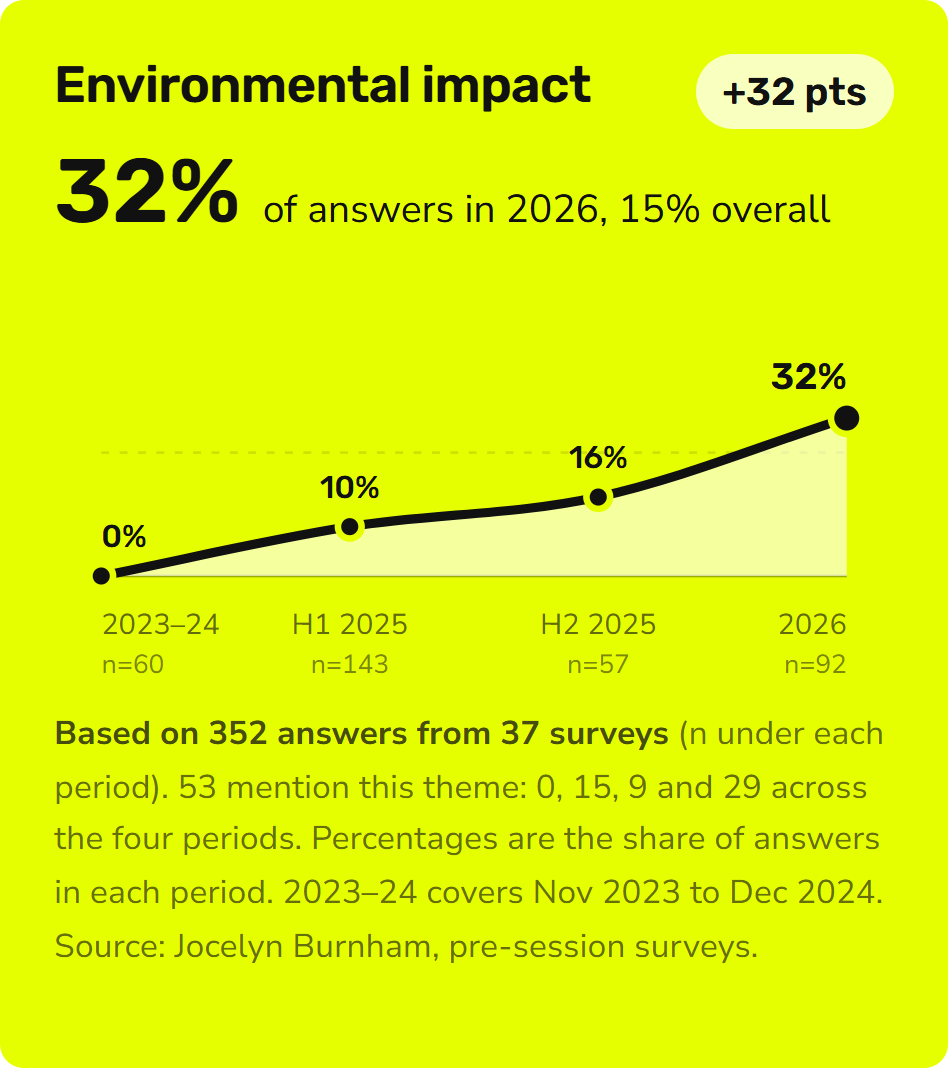
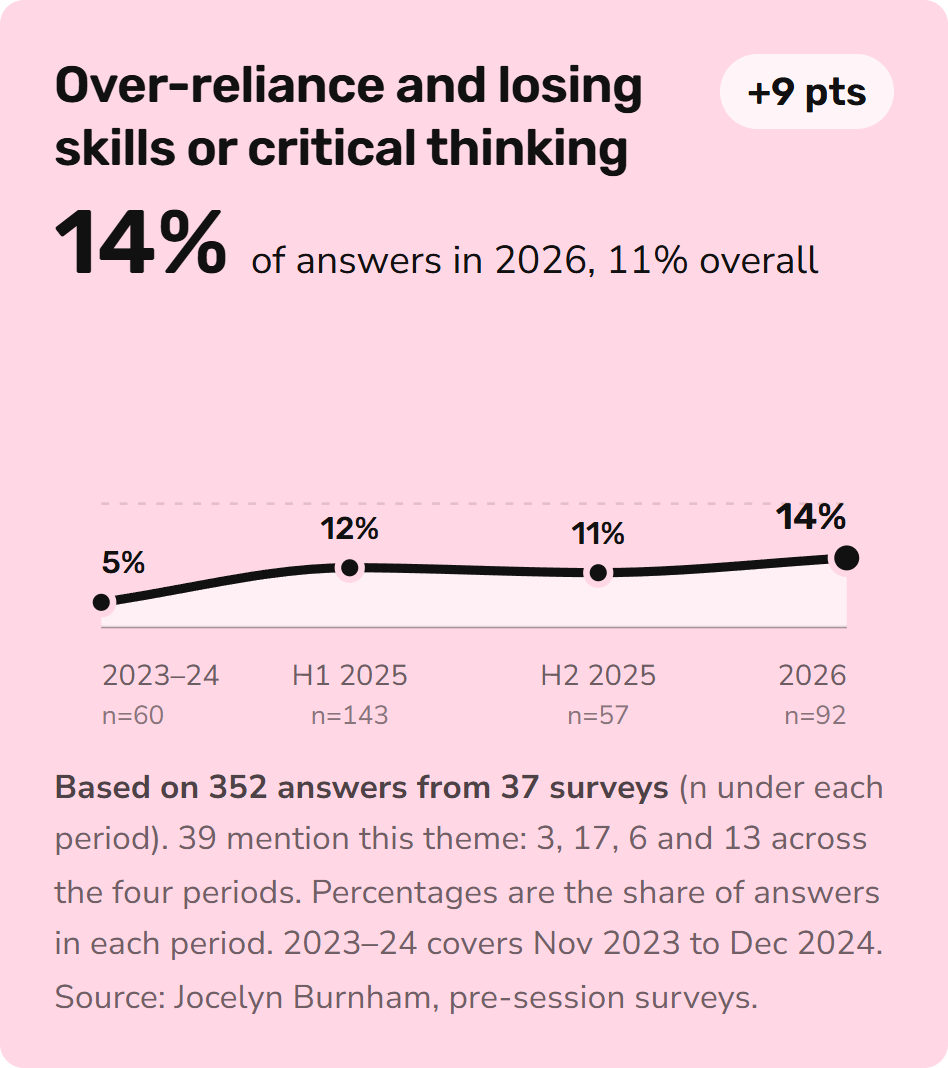
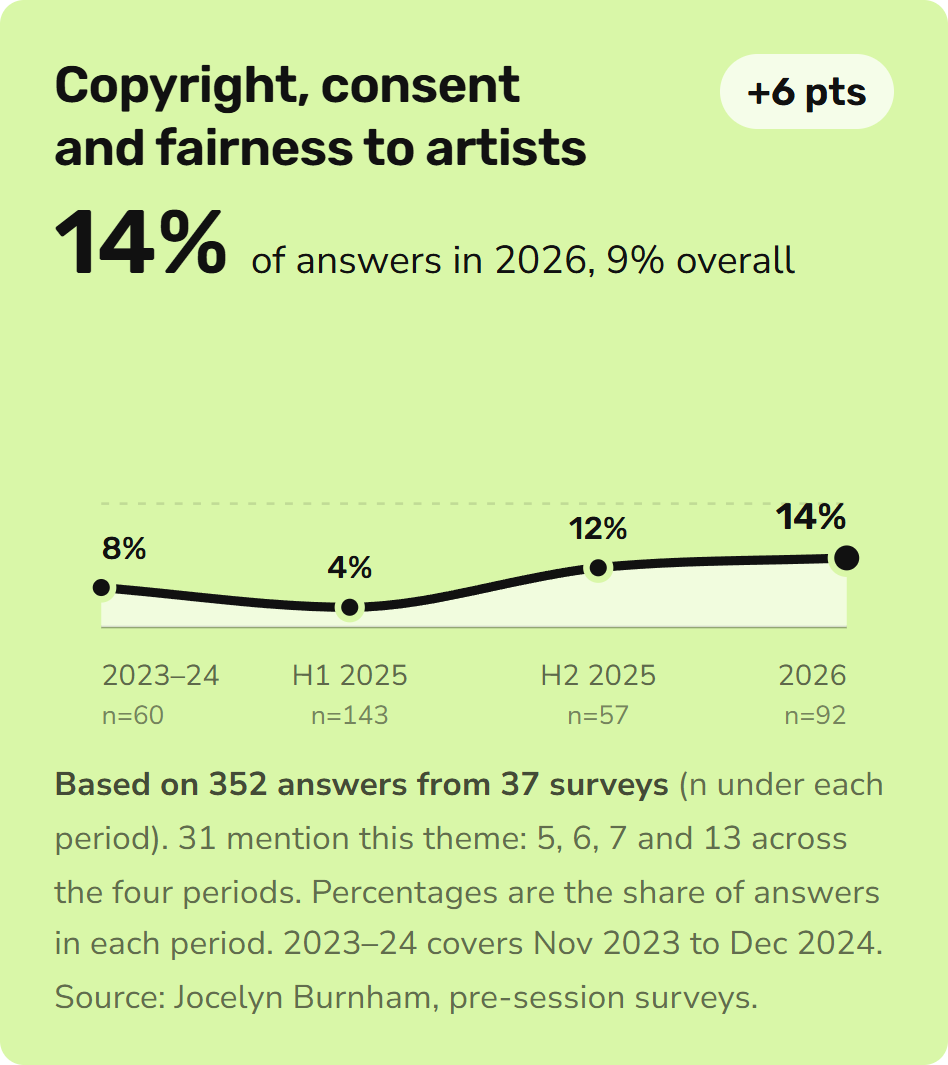
Another striking theme is how much environmental concerns have emerged as the most common critical perspective towards AI within my workshop participants, doubling between 2025 and 2026 alone. Over-reliance has also become a more common talking point, and greater consideration towards copyright concerns towards fairness to artists and creatives have also become a stronger theme.
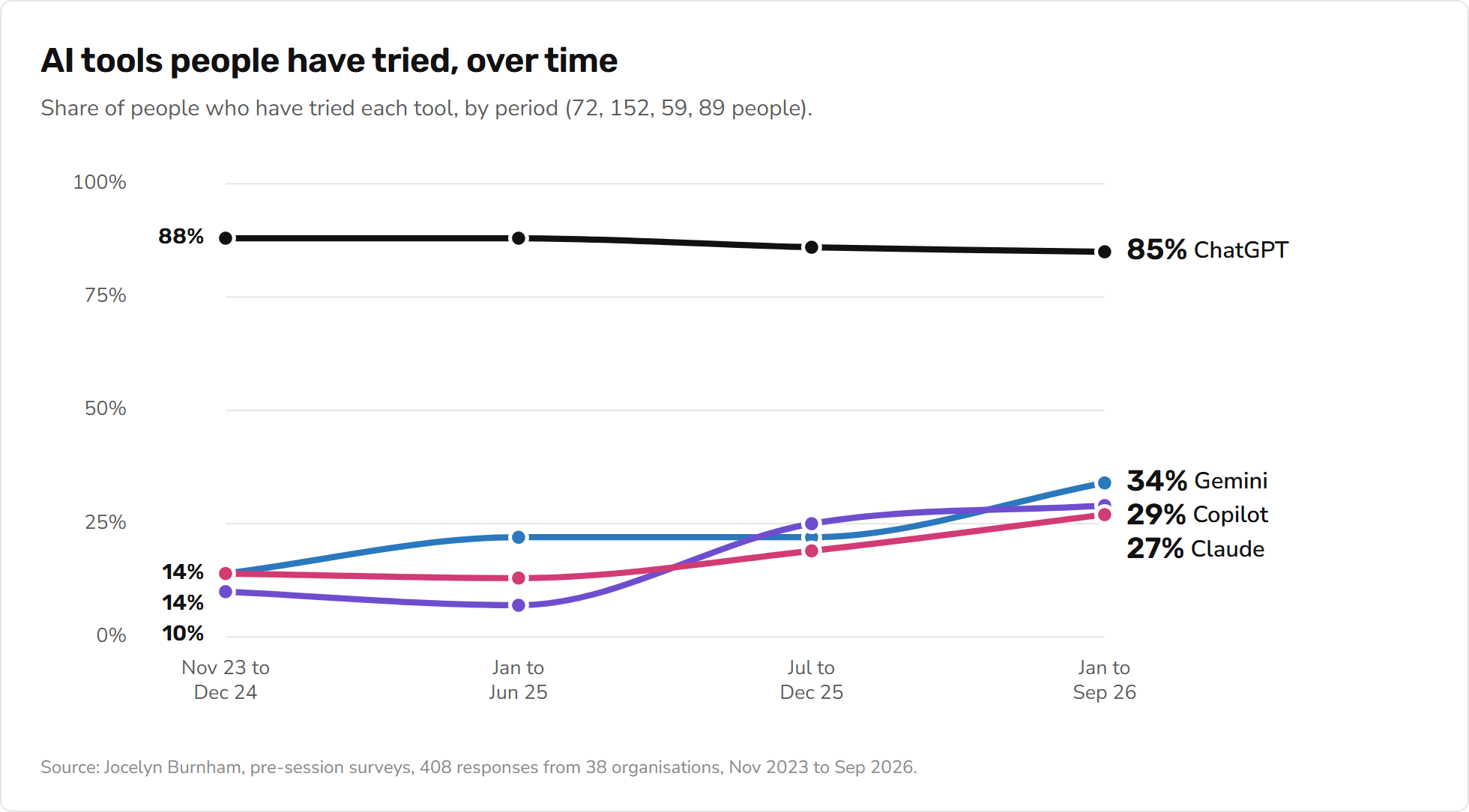
If curious, while we have seen growth in the number of AI tools participants have tried, ChatGPT remains decisively on top.
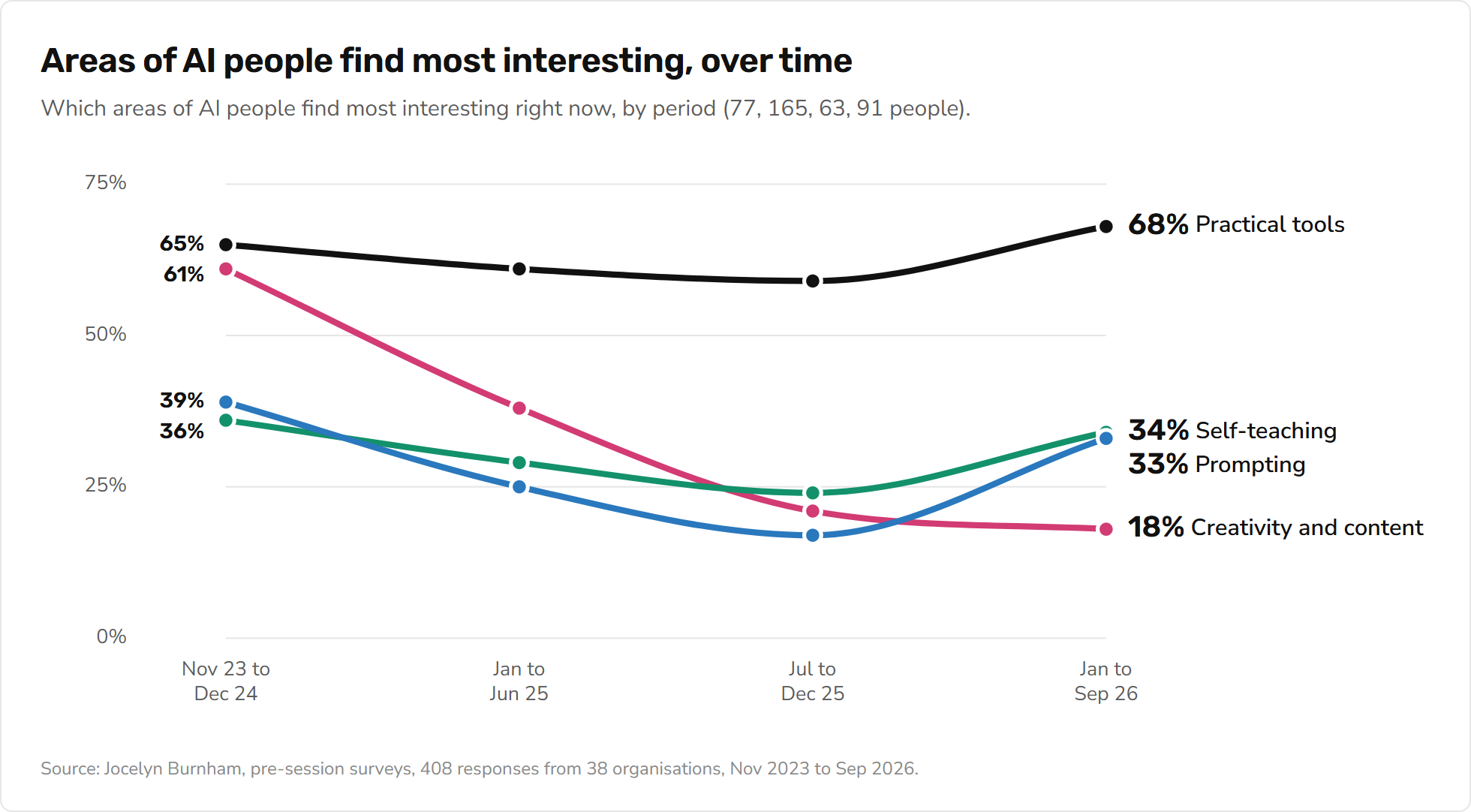
When looking at four options around what people are most interested to learn with AI, it’s noticeable how sharply the idea of using it for creativity and content has fallen - perhaps reflective of the rise of ‘AI slop’ discussions and some distaste towards how AI is being used in this way within other fields.
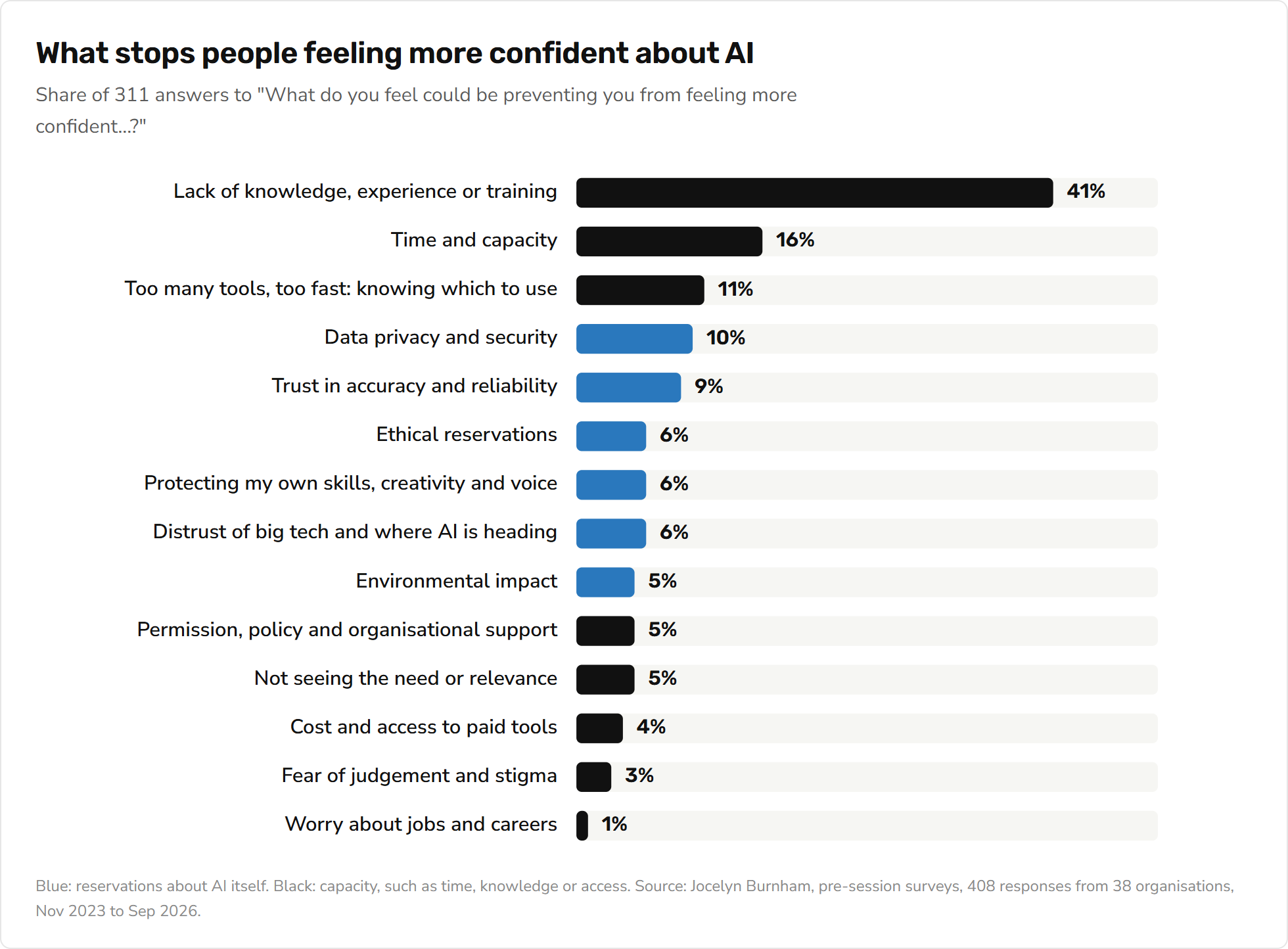
Including this as it’s perhaps interesting food-for-thought when considering what cultural workers identify as the biggest blocks for feeling more confidence towards AI. These are themes I would always encourage any policy or organisational guidance responds to, and potentially useful starting points for informal team discussions.
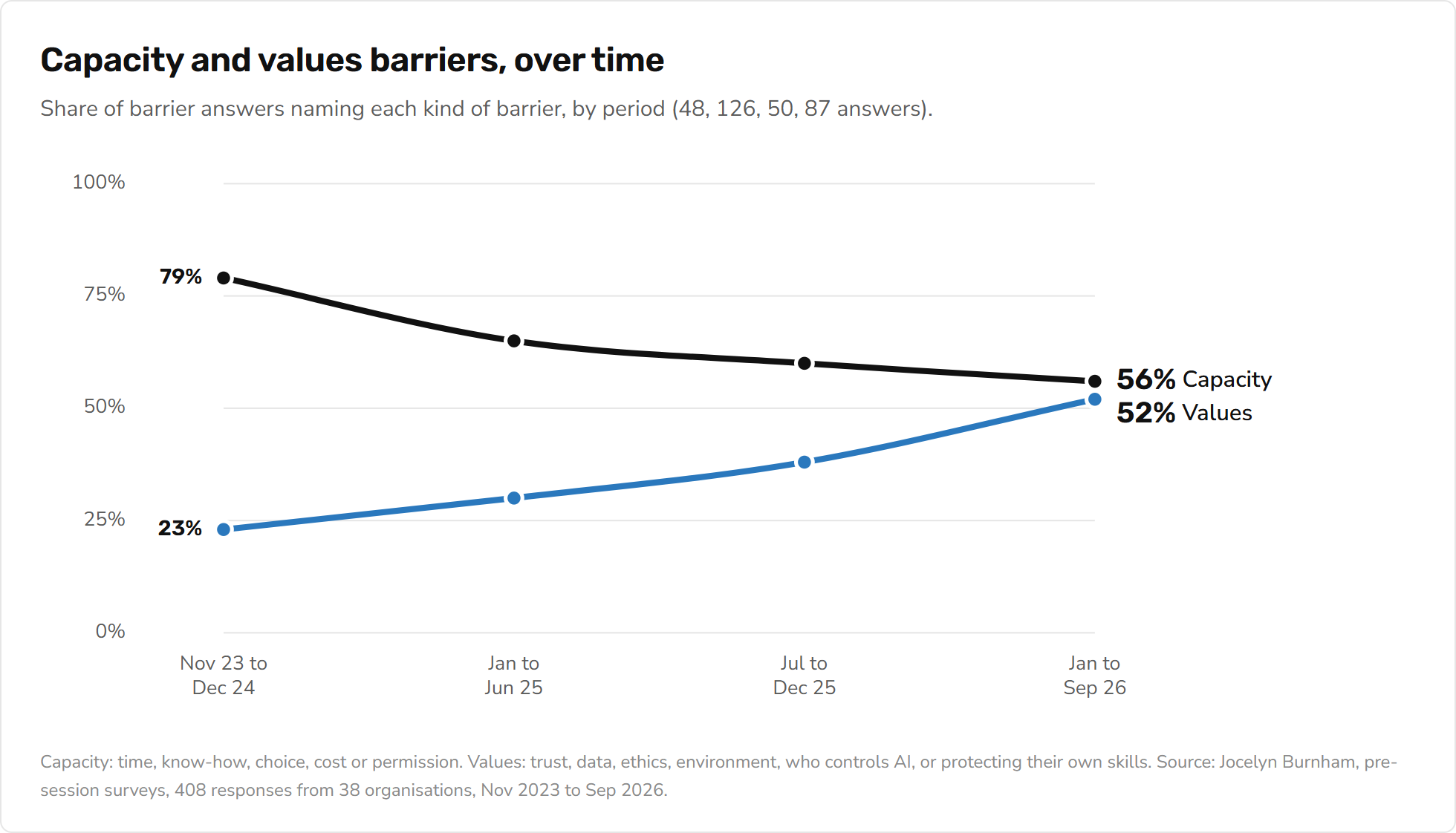
And the same data, when viewed across time, illustrates the larger role that values are playing when it comes to barriers towards AI confidence. Capacity, while still the larger overall issue, has been steadily decreasing in prominence compared to the ethical, environmental, trust and other critical perspectives towards AI in arts and culture.
If you’re a researcher who would like to speak further about any of these results, please feel free to reach out to me on jocelyn@aiforculture.com. And if you’re interested in learning more about my own approach to designing and facilitating AI workshops for arts and culture organisations, you can click here.